Monday, July 11, 2011

Word Survey: Jesus


There is not a single authoritative reference source which gives the name Jesus or Iesous as the original name of our Saviour! All of them admit that the original form of the Name was Jehoshua or Yehoshua. Why then, was it changed from Yehoshua to Jesus?

Many Hebrew names of the Old Testament prophets have been “Hellenized” when these names were rewritten in the Greek New Testament. Thus, Yesha'Yahu (Isaiah) became Isaias, Elisha became Elissaios or Elisseus (Eliseus), and Ěliyahu (Elijah) became Helias in the Greek New Testament. The King James Version has retained some of these Hellenized names. Since the King James Version was published, the newer English versions have ignored these Hellenized names of the Greek New Testament, and have preferred, quite correctly, to render them as they are found in the Hebrew Old Testament, namely: Yesha'Yahu (Isaiah), Elisha and Ěliyahu (Elijah).

Incidentally, the similarity between the Hellenized Helias (instead of Ěliyahu) and the Greek Sun-deity Helios, gave rise to the well-known assimilation of these two by the Church. Dr. A.B. Cook, in his book, Zeus -- A Study in Ancient Religion, Vol. I, pp. 178-179, elaborates on this, quoting the comments of a 5th century Christian poet and others, on this. Imagine it, Ěliyahu identified with Helios, the Greek Sun-deity!

Returning to our discussion on the reluctance of the translators to persist with all of the Hellenized name in the Greek of the New Testament, one could very well ask: but why did they persist with the Hellenized Iesous of our Saviour’s Name, and its further Latinized form Iesus? It is accepted by all, that our Saviour’s Hebrew Name was Yehoshua. So why did the translators of the Scriptures not retain or restore it, as they did with the names of the Hebrew prophets?

It is generally agreed that our Saviour’s Name is identical (or very similar) to that of the successor to Moses, Joshua. But “Joshua” was not the name of the man who led Israel into the Promised Land. The Greeks substituted the Old Testament “Yehoshua” with Iesous, the same word they used for our Saviour in the New Testament. Subsequently the Latins came and substituted it with Josue (Iosue) in the Old Testament (which became Josua in German and Joshua in English), but used Iesus in the New Testament.

In the Hebrew Scriptures we do not find the word “Joshua.” In every place it is written: Yehoshua. However, after the Babylonian captivity we find the shortened form “Yeshua” in a few places – shortened, because they then omitted the second and third letters, namely: WH. Everyone who sees the names Yehoshua and Iesous will agree there is no resemblance between the names Yehoshua and Iesous or Jesus.

Before we continue with our study of the words Iesous and Iesus, we would like to point out that we have been led to believe that our Saviour’s correct Name is: Yehoshua (It is actually Yahu-shua, but in a conjunction word, the suffix (begining) always shortens its syllables, thus we get “Yehoshua) . Our Saviour said in John 5:43, “I have come in My Father’s Name.” Again, in John 17:11 He prayed to His Father, “Keep them through Your Name which You have given Me” – according to the Nestle-Aland Greek New Testament, the United Bible Societies’ Third Edition, and the Majority Text. Therefore, in John 17:11 our Saviour states That His Father’s Name had been given to him. Again he repeats this irrefutable fact in the next verse, John 17:12, “in your Name which You gave Me. And I guarded them (or it).” Read John 17:11-12 in any of the modern English versions.

So, we have our Saviour’s clear words, in three texts, that His Father’s Name was given to Him. Paul also testified to this in Eph 3:14-15 as well as in Phil 2:9. What then is His Father’s Name? Although most scholars accept YHWH as being “Yahweh,” and many still cling to the older form “Yehowah” (or Jehovah) (Yehowah means: Yah is my calamity or my destruction), we are convinced that the correct form is Yahueh (which is 100% provable)

Two factors contributed greatly to the substitution and distortion of our Saviour’s Name. The first was the un-Scriptural superstitious teaching of the Jews that the Father’s Name is not to be uttered, that it is ineffable, that others will profane it when they use it, and that the Name must be “disguised” outside of the temple of Jerusalem.

Because of the Father’s Name being in His Son’s Name, this same disastrous suppression of the Name resulted in them (? The Greeks) giving a Hellenized, in fact a surrogate name for our Saviour. He did warn us in John 5:43, “I have come in My Father’s Name… if another comes in his own name, him you will receive.”

The second factor was the strong anti-Judaism that prevailed amongst the Gentiles, as we have already pointed out. The Gentiles wanted a saviour, but not a Jewish one. They loathed the Jews, they even loathed the Elohim of the Old Testament. Thus, a Hellenized saviour was preferred. The Hellenized theological school at Alexandria, led by the syncretizing, allegorizing, philosophying, Gnostic-indoctrinated Clement and Origen, was the place where everything started to become distorted and adapted to suit the Gentiles. The Messianic Belief, and its Saviour, had to become Hellenized to be acceptable to the Gentiles.

Where did Iesous and Iesus come from? In Bux and Schöne, Wörterbuch der Antike, under “Jesus,” we read, “JESUS: really named Jehoshua. Iesous (Greek), Iesus (Latin) is adapted from the Greek, possibly from the name of a Greek healing goddess Ieso (Iaso).”

Like all authoritative sources, this dictionary admits to the real true Name of our Saviour: Jehoshua (or as we believe: Yehoshua). It then states, as most others, that the commonly known substitute, non-original, non-real name “Jesus” was adapted from the Greek. We must remember that our Saviour was born from a Hebrew maiden, not from a Greek one. His stepfather, His half-brothers and half-sisters, in fact all His people, were Hebrews (Jews). Furthermore, this dictionary then traces the substitute name back to the Latin Iesus, and the Greek Iesous. It then traces the origin of the name Iesous back as being possibly adapted from the Greek healing goddess Ieso (Iaso).

To the uninformed I would like to point out that Iaso is the usual Greek form, while Ieso is from the Ionic dialect of the Greeks.

This startling discovery of the connection between Ieso (Iaso) and Iesous, is also revealed to us by the highly respected and authoritative unabridged edition of Liddell and Scott, Greek-English Lexicon, p.816. under “Iaso.”

The third witness comes to us in a scholarly article by Hans Lamer in Philologische Wochenschrift, No. 25, 21 June 1930, pp. 763-765. In this article the author recalls the fact of Ieso being the Ionic Greek goddess of healing. Hans Lamer then postulates, because of all the evidence, that “next to Ieso man shaped a proper masculine Iesous. This was even more welcome to the Greeks who converted to Christianity.” He then continues, “If the above is true, then the name of our Lord which we commonly use goes back to a long lost form of the name of a Greek goddess of healing. But to Greeks who venerated a healing goddess Ieso, a saviour Iesous must have been most acceptable. The Hellenization was thus rather clever.”

This then is the evidence of three sources who, like us, do not hide the fact of the Greek name Iesous being related to Ieso, the Greek goddess of healing. The Hellenization of our Saviour’s Name was indeed most cleverly done. To repeat our Saviour’s words of warning in John 5:43, “I have come in My Father’s Name, and you do not receive Me, if another comes in his own name, him you will receive.”

There is no resemblance or identifiability between our Saviour’s Name, Yehoshua, and the Greek substitute for it, Iesous. The Father’s Name, Yah- or Yahu-, cannot be seen in the Greek Iesous or in the Latin Iesus, neither in the English or German Jesus.

In spite of attempts made to justify the “translating” of the Father’s Name and His Son’s Name, the fact remains: A personal name cannot be translated! It is simply not done. The name of every single person on this earth remains the same in all languages. Nobody would make a fool of himself by calling Giuseppe Verdi by another name, Joseph Green, even though Giuseppe means Joseph and Verdi means Green. Satan’s name is the same in all languages. He has seen to it that his name has been left unmolested!

However, let us further investigate the names Ieso (Iaso) and Iesous. According to ancient Greek religion, Apollo, their great Sun-deity, had a son by the name of Asclepius, the deity of healing, but also identified with the Sun. This Asclepius had daughters, and one of them was Ieso (Iaso), the Greek goddess of healing. Because of her father’s and grandfather’s identities as Sun-deities, she too is in the same family of Sun-deities. Therefore, the name Iesous, which is derived from Ieso, can be traced back to Sun-worship.

We find other related names, all of them variants of the same name, Iasus, Iasion, Iasius, in ancient Greek religion, as being sons of Zeus. Even in India we find a similar name Issa or Issi, as surnames for their deity Shiva. Quite a few scholars have remarked on the similarity between the names of the Indian Issa or Issi, the Egyptian Isis and the Greek Iaso.

In our research on the deity Isis we made two startling discoveries. The one was that the son of Isis was called Isu by some. However, the second discovery yielded even further light: the learned scholar of Egyptian religion, Hans Bonnet, reveals to us in his Reallexikon der agyptischen Religionsgeschichte, p. 326, that the name of Isis appears in the hieroglyphic inscriptions as ESU or ES. No wonder it has been remarked, “Between Isis and Jesus as names confusion could arise. This Isis also had a child, which was called Isu by some. This Isu or Esu sound exactly like the “Jesu” that we find the Saviour called in the translated Scriptures of many languages, eg. many African languages.

Rev. Alexander Hislop, The Two Babylons, p. 164, also remarked on the similarity of Jesus and Isis, “IHS – Iesus Hominum Salvator – But let a Roman worshipper of Isis (for in the age of the emperors there were innumerable worshippers of Isis in Rome) cast his eyes upon them, and how will he read them, of course according to his own well-known system of idolatry: Isis, Horus, Seb.” He then continues with a similar example of “skilful planning” by “the very same spirit, that converted the festival of the Pagan Oannes into the feast of the Christian Johannes.” (The Hebrew name of the baptizer, and that of the apostle as well, was Yochanan or Yehochanan).

Thus, by supplanting the Name of our Saviour Yehoshua with that of the Hellenized Iesous (IHSOUS), which became the Latinized Iesus, it was easy to make the pagans feel welcome – those pagans who worshipped the Greek Ieso (Iaso), of which the masculine counterpart is Iesous (in capitals: IHSOUS), as well as those who worshipped the Egyptian Esu (Isis).

Further evidence of syncretism with the Isis-system is found in A Kircher, Oedipus Aegypticus, wherein the name of the son of Isis is revealed to us as “Iessus, which signifies Issa, whom they also call Christ in Greek.”

Another pagan group of worshippers could also be made to feel at home with the introduction of this surrogate name Iesous (IHSOUS) or Iesus, namely the worshippers of Esus. Jan de Vries holds that Esus was a Gallic deity comparable to the Scandinavian Odin. Odin, of course, was the Scandinavian Sky-deity. This Gallic or Celtic deity, Esus, has also been identified with Mars, and by others with Mercury, and was regarded to be the special deity of Paris.

Just as Iaso, Ieso, Iesous are derived from the Greek word for healing, iasis, we similarly find Isis (more correctly; Esu) and her son Horus (more correctly; Her), regarded as deities of healing as well as cosmic deities, or Sun-deities, by others.

The most disturbing evidence is yet to follow. The abbreviated form of the name Iesous is: Ies or in capitals: IHS, for in Greek the capital for “e” is “H.” This is to be found on many inscriptions made by the Church during the Dark Middle Ages. This fact is also well documented and is generally admitted by scholarly sources and ordinary English dictionaries. These dictionaries bear witness to the fact of IHS (Ies) being an abbreviated form of IHSOUS (Iesous).

Furthermore, the shocking fact has also been recorded for us that IHS was a mystery surname of Bacchus, and was afterwards taken as initials for Iesous, capitals: IHSOUS. We discovered this in a dictionary of mythology and in an encyclopedia of religion.

This revelation was confirmed by a third witness, Dr. E.W. Bullinger, The Apocalypse, footnote p. 396, “Whatever meanings of… IHS may be given, the fact remains that it was part of the name of Bacchus…” We then realized most painfully, that our beloved Messiah was identified with the Greek deity Bacchus, by giving our Saviour the surname or other name of Bacchus, namely: IHS or Ies! Bacchus was well known to be a Sun-deity. Bacchus was also a commonly known name for Tammuz among classical writers. Tammuz, as you will remember, was known to be the young returning Sun-deity, returning in spring. Bacchus, also known as Dionysus, was expressly identified with the Egyptian Osiris, the well known Egyptian Sun-deity. Bacchus was also called Ichthus, the Fish.

So, yet another group, the worshippers of Bacchus, the Sun-deity, alias Ies (IHS), were conciliated, were made welcome, with the foreign-to-the-Hebrew name of Iesous (IHSOUS) or Iesus. The most appalling revelation startled us, indeed. After being enlightened about the solar origin of the word IHS and its fuller form IHSOUS (Iesous), we are no longer surprised to find the ecclesiastical emblem, IHS, encircled by sunrays, commonly displayed on church windows:

No wonder that we read the testimony of the learned Christian advocate, M. Turretin, in describing the state of Christianity in the 4th century, saying “that it was not so much the [Roman] Empire that was brought over to the Faith, as the Faith that was brought over to the Empire; not the Pagans who were converted to Christianity, but Christianity that was converted to Paganism.”

A further witness to this paganization of the Messianic Belief is that of Emperor Hadrian, who, in a letter to the Consul Serianus, wrote, “There are there (in Egypt) Christians who worship Serapis; and devote to Serapis are those who call themselves ‘Bishops of Christ.’”

Another testimony comes to us from the letter of Faustus, writing to Augustine, “You have substituted your love-feasts for the sacrifice of the Pagans; for their idols your martyrs, whom you serve with the very same honours. You appease the shades of the dead with wine and feasts; you celebrate the solemn festivals of the Gentiles, their calends, and their solctices; and as to their manners, those you have retained without any alteration. Nothing distinguishes you from the Pagans, except that you hold your assemblies apart from them.

Our Saviour Yehoshua, in His final message to us, the book of Revelation, has warned us of this in Rev 17, Rev 18, Rev 19, and also in Rev 13, Rev 14, and Rev 16 – Babylon, Mystery Babylon. The Great Harlot has made “the inhabitants of the earth drunk with the wine of her fornication,” out of the “golden cup” in her hand, “full of abominations and the filthiness of her fornication” (Rev 17:1-5). She is also described as “sitting on a scarlet beast, full of names of blasphemy” (verse 3).

Tammuz, alias Bacchus, has a surname: Ies or IHS. He was also known as the Fish (Ichthus), and had the Tau, the cross, as his sign. These three (Ies, the Fish, and the cross) have survived, and are still with us!

In Acts 4:12 we read, “Nor is there salvation in any other, for there is no other name under heaven given among men by which we must be saved.” This verse clearly tells us that there is only one Name whereby we can be saved – there is none other. It cannot be Yehoshua as well as Jesus, Iesous, Iesus, or Ies (Bacchus). There is no resemblance between the names Yehoshua and Jesus. The one is correct and the other one a substitute. The one contains our Father’s Name and the other one not. Yehoshua has said that He came in His Father’s Name (John 5:43). In the newer translations of the Scriptures, we read in two places (John 17:11 and 12), that Yehoshua said that His Father’s Name was given to Him. If we believe the Scriptures, if we believe our Messiah, if we believe what is written in Acts 4:12, we cannot be satisfied with any substitute name. We must believe, accept, and be baptized into the only saving Name: Yehoshua.

In the end-time, according to Joel 2:32, calling on the Name of Yahueh will be necessary for salvation and deliverance. By believing in, calling on, and being baptized in the Name of Yehoshua, we do “call on the Name of Yahueh,” through His Son, who had His Father’s Name given to Him, by His Father. “I have come in My Father’s Name, and you do not receive Me; if another comes in his own name, him you will receive” (John 5:43).

The writer of Proverbs challenges us in Prov 30:4, “What is His Name, and what is His Son’s Name, if thou canst tell?” KJV. A very interesting alternate rendering for Psalm 72:17 is given to us in the centre column of the Reference King James Version, speaking about the promised Messiah. “His Name shall be as a Son to continue His Father’s Name for ever.”

As I have stated, there is no resemblance between the Name Yehoshua abd the name Jesus. Neither is there any resemblance between their meanings. Yehoshua means: “the Salvation of Yah or Yahu.” “Jesus” is derived from Iesus, derived from Iesous (IHSOUS), obviously derived from the Greek goddess of healing, Ieso or Iaso. Her name was derived from iasis, which means “healing.” Further, the short form, or original source of the name Iesous (IHSOUS) is Ies (IHS), the very surname of Bacchus, the Sun-deity.

Therefore, the two names differ completely in their origin, and in their meaning. And more important: Our Saviour’s Name contains the Name of His Father, which the substitute name does not. Further proof of the Father’s Name being in the Son’s Name is found in Eph 3:14-15, “For this reason I bow my knees to the Father… from whom the whole family in heaven and earth is named.” Surely, if His family receives His Name, His only begotten Son will also have His Name.

Another proof is Rev 14:1, which in the Textus Receptus based translations read somewhat differently to what is found in the newer versions. Rev 14:1-5, in Green’s Interlinear Translation reads, “And I saw, and behold, a Lamb standing on the Mount Zion! And with Him a hundred and forty-four thousand, having the Name of His Father written upon their foreheads… These are those who were not defiled… These are those following the Lamb wherever He may go. These were redeemed… first-fruit to Elohim… And no guile was found in their mouth, for they are without blemish before the throne of Elohim.”

The Nestle-Aland test reads, “having His Name and the Name of His Father written on their foreheads.” Do we wish to be part of this first-fruit company? Then we are to make quite certain that we have the Father’s Name and the Lamb’s Name on (or in) our foreheads. The similarity between their Names is obvious. Whether it will be just one Name, Yah, or whether it will be both Yahueh and Yehoshua, is not clearly indicated, and is less important – as long as we have the essential part of the Name, Yah, which transmits its etymological concept of life, ever-lasting life. Verses 4-5 warn us against defilement – spiritual defilement – the lies that we have inherited, including the lies about the Names, “O Yahueh,… the Gentiles shall come to you from the ends of the earth and say, ‘Surely our fathers have inherited lies…’ Therefore behold, I will this once cause them to know…; and they shall know My Name is Yahueh” (Jer 16 19-21), a prophecy for the end-time.

“Therefore My people shall know My Name” (Isa 52:6). “I will bring the one-third through the fire, will refine them as silver is refined, and test them as gold is tested. They will call on My Name, and I will answer them. I will say, ‘This is My people’; and each one will say, ‘Yahueh is my Mighty One’” (Zech 13:9). “For then will I restore to the peoples a pure language, that they all may call on the Name of Yahueh, to serve Him with one accord” (Zeph 3:9). “And Yahueh shall be King over all the earth. In that day it shall be – ‘Yahueh is one,’ and His Name one” (Zech 14:9). He will no longer be called by all those hundreds of names, by which He is known today. His Name will be “one.” And His Son, in whose Name the Father’s Name is contained, will subject Himself to His Father in that day (1 Cor 15:28).

(This is an excerpt from the book "Come out of her my people" by Dr. Chris Koster)

Monday, July 4, 2011

Word Survey: Glory


No fewer than 25 Hebrew words are rendered by doxa in the Septuagint, the Greek translation of the Hebrew Old Testament. Of these 25 words, 7 are more common, the most important being kabod. This Greek word doxa of the Greek translation of the Old Testament, and the doxa of the New Testament, are usually rendered “glory” in the English versions, a translation of the Latin gloria. If we first look at the Hebrew Old Testament, we find that kabod has usually been rendered “honour” when applied to man, but rendered “glory” when applied to our Heavenly Father.
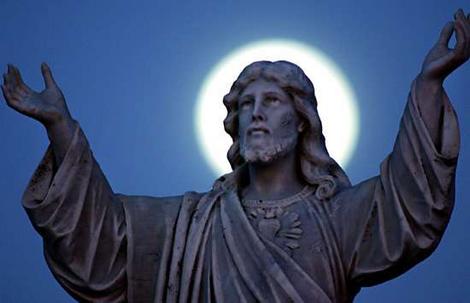
Je-Zeus with a halo

Why were they so keen to apply the word “glory” to our Mighty One? What is the meaning of the word “glory”? Funk & Wagnalls, New Standard Dictionary of the English Language, under “glory,” gives the religious symbolic meaning, “In religious symbolism, the complete representation of an emanation of light from the person of a sanctified being, consisting of the aureole and the nimbus;” and further on, “The quality of being radiant or shining; brilliancy; brightness; luster; as the glory of the sun;” and further on, “A sunburst; any ring of light; a halo.”

John Ogilvie, The Comprehensive English Dictionary, under “glory,” explains it as, “splendor, as of the sun.” Similar statements are made by The Oxford English Dictionary and Webster’s New International Dictionary. The latter states, “glory is the general term of the aureole and the nimbus” - aureole being the halo or ring round the sun, and the nimbus being the sun-disc.

This meaning, as well as the word itself, would be acceptable if the commonly used Hebrew words of the Old Testament, and the Greek word doxa, have had the same meaning of sun-radiance or circles of light. However, we do not find any trace of sun-radiance or emanation of light in the most common word used in the Hebrew text, namely kabod, or in the Greek doxa.

Once more we are rudely awakened to the fact of the adoption of Sun-worship into the Church, the merger of Sun-worship with the Messianic Belief. In the Dictionaries, encyclopedias and ecclesiastical books, we find many illustrations of our Saviour, the Virgin, and the saints, encircled with radiant circles or emanations of light around them.

Kabad literally means to be heavy or to make weighty, and esteem in its figurative sense, and its noun is kabod. The Greek word doxa simply means opinion, estimation, esteem, repute, coming from the verb dokeo, which means “to seem.”

Thus, the ecclesiastical symbolic meaning of the word “glory,” being that of radiance or emanation of light as from the sun, is strong evidence of the Church’s solarization of our Messiah and of his Father. The Church identified Elohim with the Sun-deity, which was the prevailing deity of the Roman emperors, the Roman capital and its empire.

However, not only does the concept of “glory” stem from Sun-worship, but we also find proof of “glory” (Gloria) as having been a Roman goddess, discovered in the form of an icon personified by a woman, the upper part of her body almost naked, holding a circle on which are the zodiac signs.

Pauly-Wissowa also defines Gloria as a personification of fame, the word being found very frequently on the coins of Constantine and his successors. Besides the frequent occurrence of the word Gloria on the coins, the image of this goddess is found on two coins, one of Constantius II and one of Constantine II.

We should therefore eliminate the word “glory” from our religious vocabulary for three reasons:

1.      We have been commanded in Exodus 23:13 to “make no mention of the names of other mighty ones, nor let it be heard from your mouth”- especially in our worship, applying these names to the One we love, and His Son.
2.      The concept of the word “glory” in religious symbolism, as we read in Funk @ Wagnalls Dictionary, is that of the emanation or radiance of light, as of the sun. This is proof of the solarization of our beloved Saviour, identifying Him, as well as His Father, with the Sun-deity.
3.      The Hebrew word kabod as well as Greek word doxa, do not carry the meaning of sun-radiance or sunlight at all. Therefore, the word “glory” is an incorrect rendering of those words.

What then should we use instead of the word “glory”? Simply when the Hebrew words and the Greek word mean: “esteem,” or “high esteem” or “repute.” These words carry the meaning of the Scriptural words and do not stem from the names of deities as far as we know, and should be used wherever our versions have “glory.”

(This is an excerpt from the book "Come out of her my people" by Dr. Chris Koster)

Sunday, July 3, 2011

Word Survey: Amen


The Hebrew of the Old Testament reveals to us that the Scriptural Hebrew word (which means: so be it, or verily or surely) is “Amein” and not “Amen.” Likewise, the Greek equivalent in the Greek New Testament is also pronounced: “Amein.” Anyone can check on this in Strong’s Concordance, No, 543 in its Hebrew Lexicon and No. 281 in its Greek Lexicon, or in Aaron Pick’s Dictionary of Old Testament Words for English Readers. Why then, has this Scriptural word “Amein” been rendered as “Amen” in our versions? Again we can see how the pagans have been made welcome, how they were appeased, by adopting the name of a pagan deity into the Church.

The Egyptians, including the Alexandrians, had been worshiping, or been acquainted with, the head of the Egyptian pantheon, Amen-Ra, the great Sun-deity, for more than 1,000 years, B.C.E Before this deity became known as Amen-Ra, he was only known as Amen among the Thebans.

This substitution of “Amen” for “Amein” was greatly facilitated by the fact that this Egyptian deity’s name was spelt in Egyptian hieroglyphic language with only three letters: AMN, just as we find a similar paucity of vowels in the Scriptural Hebrew, which prior to its vocal-pointing by the Massoretes, also only spelt its AMEIN as: AMN. However, with the vocal-pointing by the Massoretes the Scriptural word has been preserved for us as: AMEIN. On the other hand, the Egyptian deity AMN is rendered by various sources as AMEN, or AMUN, or as AMON. However, the most reliable Egyptologists and archaeologists, such as Sir E.A. Wallis Budge, Dr. A.B. Cook, Prof. A. Wiedemann, Sir W.M.F. Petrie, and A.W. Shorter, as well as some authoritative dictionaries, all render the name of this Egyptian deity as AMEN.

Originally this AMEN was the Theban “hidden god who is in heaven,” “the hidden one, probably meaning hidden sun.” Funk and Wagnalls, Standard College Dictionary, describes it, “AMEN: In Egyptian mythology, the god of life and procreation… later identified with the Sun-god as the supreme deity, and called ‘Amen-Ra’.”

James Bonwick, Egyptian Belief and Modern Thought, repeatedly and frankly calls the Sun-deity of Egypt by its correct name: AMEN. He states on pg. 123-125, “AMEN… is in a sense, the chief deity of Egypt – supreme divinity. Whatever else he be, he must be accepted as the sun… the hidden god, the solar aspect is clear… there is the dist of the sun… the sun Amen… His identification with Baal… establishes him as a solar deity…”

Smith’s Bible Dictionary expresses AMEN as, “an Egyptian divinity… He was worshipped… as Amen-Ra, or ‘Amen the Sun.’” Herodotos recorded for us how the Greeks identified their Zeus with Amen-Ra.

Our Saviour Y’hoshua calls himself “the Amein” in Rev 3:14. Substituting a title or name of our Saviour with the name of the great hidden Sky-deity or the great Sun-deity of the Egyptians, Amen, is inconceivable! The difference is subtle, but it is there. By ending our prayers with “Amen” instead of “Amein,” one could very well ask: Have we been mislead to invoke the name of the Egyptian Sun-Deity at the end of our prayers?

(This is an excerpt from the book "Come out of her my people" by Dr. Chris Koster)
Word Survey: Grace


We are commanded to not use the names of other deities or the names of pagan “gods”, we are not even aloud to let it be heard out of our mouths: “And in all that I have said to you take heed. And make no mention of the name of other mighty ones, let it not be heard from your mouth” (Exodus 23:13). Most of us have grown up in a western Christianized culture that has unfortunately been polluted with pagan culture too. The result of this is that most of the words that are used in the churches for worship come directly from pagan worship. I will be revealing most of these words one by one.

The word that I am going to cover today is the word “Grace”. Are we to use this word to describe the true faith of the almighty? Are we even to let it heard out of our mouths? Let us see where it originates from:

It comes from the Latin word gratia. This alone should raise some flags already. Nothing from Latin origin can be good and is a clear indication that the word used is not from the original writings.

The fairy tale Sleeping Beauty directly refers to the gifts and benefits bestowed by the Muses, since the Muses were known as Fairies in the Germanic and Gaelic cultures. The “Three Fates” were a triad of female deities also known as the Three Graces, or Three Charities. In the Greek and Roman mythologies, they ruled the lives of men, and determined the length of a person’s life.

The Three Graces
The “Three Graces” or Three Charities, were a Pagan trinity known as the Three Fates. Their names were Clotho (our word “cloth”, was the producer of the “thread of life”), Lachesis (carrying rods which she shook to determine the fate of mankind), and Atropos (who cuts the thread, determining the length of a person’s life).

Here is another version of what is called the “three Graces”

In Greek mythology, the three goddesses of joy, charm, and beauty. The daughters of the god Zeus and the nymph Eurynome, they were named Aglaia (Splendor), Euphrosyne (Mirth), and Thalia (Good Cheer). The Graces presided over banquets, dances, and all other pleasurable social events, and brought joy and goodwill to both gods and mortals. They were the special attendants of the divinities of love, Aphrodite and Eros, and together with companions, the Muses, they sang to the gods on Mount Olympus, and danced to beautiful music that the god Apollo made upon his lyre. In some legends Aglaia was wed to Hephaestus, the craftsman among the gods. Their marriage explains the traditional association of the Graces with the arts; like the Muses, they were believed to endow artists and poets with the ability to create beautiful works of art. The Graces were rarely treated as individuals, but always together as a kind of triple embodiment of grace and beauty. In art they are usually represented as lithe young maidens, dancing in a circle. (Microsoft Encarta Encyclopedia 99)

So as you can see, the word “grace” is not to be used and is a mistranslation of the original writings. This word is also linked to sun worship as shown above. If we do continue to use this pagan word, then we are willfully sinning against the Word of YHWH. What then is the word that is correctly translated from the original? We are to use the word favor instead of "grace" as that is the correct word with the correct meaning in Scripture

(This is an excerpt from the book "Come out of her my people" by Dr. Chris Koster)

Friday, July 1, 2011

When does the count to Shavuot begin?


The correct date of Shavuot is probably the most controversial and most argued about of all the appointed times of YHWH, besides Pesach. This is due to a lot of confusion created by Rabbis and other men’s ideas on when it should be. The Scripture however is very clear on this point and easy to understand. All we are to do is read the Scripture for ourselves.

The Scripture teaches us: “And from the morrow after the Sabbath, from the day that you brought the sheaf of the wave offering, you shall count for yourselves: seven completed Sabbaths. Until the morrow after the seventh Sabbath you count fifty days, then you shall bring a new grain offering to יהוה (YHWH)” (Lev 23:15-16). So what the Scripture is saying here is that we are to start the counting of the omer from the Sabbath that falls in the feast of unleavened bread (Matzot).

Let us first have a look at what Rabbinical Judaism teaches us when the count of the omer (that is the count till Shavuot) begins. Judaism teaches us that the first day of Matzot is a Sabbath and we are to start the count of the omer from the day after the first day of Matzot. There is one very critical error with this as we will see soon.

To understand why this is not correct, we need to fully understand the attributes of the Appointed times of YHWH. Not all His appointed times have Shabbat status.

The Hebrew word Shabbaton, which describes a specific day to have Sabbath status, is found 11 (eleven) times in the Tanach, all of which occur in the Torah of Mosheh. 6 of those times, the word is used in the phrase Shabbat Shabbaton, and the other 5 occurrences the word Shabbaton is used independent of the phrase above. The term Shabbaton is used to describe the weekly Sabbath and each of the 7th month moadim (appointments).  It also describes the 7th year rest for the land. The word Shabbaton occurs 11 times in 10 verses:  Used for: Sabbath (Shemot/Exodus 16:23; 31:15; 35:2; Vayiqra/Leviticus 23:3), Yom Teru’ah (Vayiqra/Leviticus 23:24), Yom Kippur (Vayiqra/Leviticus 16:31; 23:32), Sukkoth (Feast of Tabernacles) (Vayiqra/Leviticus 23:39 twice), every seventh year (Vayiqra/Leviticus 25:4, 5).

The word Shabbat and Sheva (Seven) are synonymous with each other and go hand in hand with each other.  The Shabbat is on the Seventh day, the land must rest (Shabbat) every Seventh year, all the appointed times of YHWH that are in the Seventh moon (month) all have Shabbat status etc. On the other side of the coin, none of the appointed times of YHWH that fall in the first and third moons have Shabbat status.

So it is very clear to see that Rabbinical Judaism have it wrong when it comes to the start of the count of the omer as the first and last days of Matzot do not have Shabbat status. So there is only one other option then to when the count must begin. This is of course from the weekly Sabbath that falls in the time period during the feast of unleavened bread (Matzot). Because of this, Shavuot will always fall on a first day of the week. 


The Way, the Truth and the Life


Here is a great example that if you do not study and know the Torah, then you are not going to understand what the Mashiyach Y’hoshua is saying when he said: “יהושע (Y’hoshua) said to him, “I am the Way, and the Truth, and the Life. No one comes to the Father except through Me” (John 14:6). How many times have you read over this verse or even quoted it? Did you really know what the Mashiyach was saying? The fact of the matter is that the majority of the time that this verse is quoted, it is way out of context and is being quoted to say something that is not true to this statement. To truly understand this statement, one has to go to the Torah and understand what is written there first.

Let us break the sentence up and have a look at some of these statements individually to get the full understanding of what our Savior was saying.

The Life

What was the Mashiyach saying when he said that he is the life? Let us look at a few Scriptures that reveal to us what the life is. “But do not eat flesh with its life, its blood” (Gen 9:4). “For the life of the flesh is in the blood, and I have given it to you upon the altar to make a covering for your lives, for it is the blood that makes a covering for the life” (Lev 17:11). “for it is the life of all flesh. Its blood is for its life. And I said to the children of Yisra’ĕl, ‘Do not eat the blood of any flesh, for the life of all flesh is its blood. Anyone eating it is cut off” (Lev 17:14). “Only, be firm not to eat the blood, for the blood is the life, do not eat the life with the meat” (Deut 12:23). So as you can clearly see, the life that Y’shua was talking about is his blood. “He redeems their life from oppression and from violence; And their blood is precious in His eyes” (Psalm 72:14). Is it the blood that is precious in the eyes of the Almighty, or is it their life? The life of a person is in his blood. “יהושע (Y’hoshua) therefore said to them, “Truly, truly, I say to you, unless you eat the flesh of the Son of Aḏam and drink His blood, you possess no life in yourselves.
“He who eats My flesh and drinks My blood possesses everlasting life, and I shall raise him up in the last day” (John 6:53-54). What Y’hoshua was saying to his disciples was not to physically eat his flesh and drink his blood as that is against what the Torah teaches. What he was saying was that they should “eat his flesh” do as he did, and “drink his blood” that his blood was for the covering of their sins.

Clearly you should now see that the blood of Y’hoshua that was spilled on the torture stake was for the covering of our sins.

This is what Y’hoshua meant by “I am the life”


The Truth

When the Scriptures speak of truth, it is referring to the Torah of YHWH. Here are some Scriptures again that show you this to be true. “He who walks blamelessly, And does righteousness, And speaks the truth in his heart” (Psalm 15:2). “Lead me in Your truth and teach me, For You are the Elohim of my deliverance; On You I wait all the day” (Psalm 25:5). Is Dawid wanting to be taught in Truth or in the Instruction of YHWH (Torah)? Or is it not maybe the same thing? Let us see what he has to say about this. “You are near, O יהוה (YHWH), And all Your commands are truth” (Psalmlm 119:151). “The sum of Your word is truth, And all Your righteous right-rulings are forever” (Psalm 119:160). Here you can see that Dawid is referring directly to the Torah as the Truth. So if someone speaks truth, they are speaking the Torah of YHWH, on the other side of the coin, if they do not have or speak the Torah of YHWH, then there is no truth in them. This is what John was saying when he wrote: “And by this we know that we know Him, if we guard His commands. The one who says, “I know Him,” and does not guard His commands, is a liar, and the truth is not in him. But whoever guards His Word, truly the love of Elohim has been perfected in him. By this we know that we are in Him” (1 John 2:3). John had a very good understanding of the Torah and of Y’hoshua. With this knowledge, he showed us that we are still to obey the Instruction of YHWH.

“But you shall say to them, ‘This is a nation that did not obey the voice of יהוה (YHWH) their Elohim, nor did they accept instruction. Truth has perished and has been cut off from their mouth” (Jeremiah 7:28). Here Jeremiah was prophesying and revealing that Israel did not accepted the Torah (Truth) of YHWH. That is why Israel looks like it does today.

Daniel was also a great prophet and was righteous as he lived in truth. He understood that the Torah of YHWH was truth. “Now I, Neḇuḵaḏnetstsar, am praising and exalting and esteeming the Sovereign of the heavens, for all His works are truth, and His ways right. And those who walk in pride He is able to humble” (Dan 4:37), “As it is written in the Torah of Mosheh, all this evil has come upon us, and we have not entreated the face of יהוה (YHWH) our Elohim, to turn back from our crookednesses, and to study Your truth” (Dan 9:13), “But let me declare to you what is written in the Scripture of Truth, and there is no one supporting me against these, except Miḵa’ĕl your head” (Dan 10:21). Is Daniel saying that we must turn from crookedness and study the Almighty’s truth? What is his truth? The truth is the Words of YHWH which is His Torah!

Here is another example: “These are the words you should do: speak the truth (Torah) to one another, judge with truth (Torah) and right-ruling for peace in your gates” (Zech 8:16)

“I rejoiced greatly because I found some of your children walking in truth (Torah), as we received a command from the Father” (2 John 1:4). Here John is telling us that the Almighty rejoiced greatly when he found some of the children walking in Torah as was commanded by Him. Is this not after the death and resurrection of the Mashiyach? “I have no greater joy than to hear of my children walking in truth (Torah)” (3 John 1:4). YHWH is clearly happy when we turn to His Truth and follow His Torah, He rejoices when we do. He becomes sad when we turn from doing the Torah and even becomes angry too.

So when Y’hoshua said “I am the truth” he was saying that he was the Torah of YHWH and we are to follow in his footsteps.

The Way

Now if you go read the Torah, especially Leviticus, you will notice very quickly that the people of Israel did not go directly to the Almighty for the forgiveness of their sins. They went to the priests with their offerings and the priests performed the sacrifices and presented it to YHWH. The High Priest also made a covering of the sins of the nation once a year on Yom Kippur. The High Priest had to set himself apart from the nation and from sin in order that he does not die when he enters into the Most Set Apart of the Set Apart place. This is because the presence of YHWH was there and if the High Priest did not cleans himself from ALL sin, he would have fallen dead immediately. Aharon the High Priest was also referred to as Mashiyach (Anointed One). So basically, the priests where the way to the father for the forgiveness of sins.

Let us look at a few Scriptures: “And you, speak to all the wise of heart, whom I have filled with a spirit of wisdom, and they shall make the garments of Aharon, to set him apart, for him to serve as priest to Me” (Exodus 28:3), “And you shall put them on Aharon your brother and on his sons with him, and shall anoint them, and shall ordain them, and shall set them apart, and they shall serve as priests to Me” (Exodus 28:41)

“and shall gird them with girdles – Aharon and his sons – and put the turbans on them. And the priesthood shall be theirs for an everlasting law. So you shall ordain Aharon and his sons” (Exodus 29:9). Here you can see that the priesthood is an everlasting law. If it is everlasting, does that mean that it is still a law today? Is today part of everlasting?

“And Aharon shall make a covering upon its horns once a year with the blood of the sin offering of a covering – once a year he makes a covering upon it throughout your generations. It is most set-apart to יהוה (YHWH)” (Exodus 30:10). Here is where it describes some of the duties of the High Priest (Aharon at that time) that was done on Yom Kippur every year.

“And he shall do with the bull as he did with the bull as a sin offering – so shall he do it. And the priest shall make a covering for them, and it shall be forgiven them” (Lev 4:20), “and shall bring his guilt offering to יהוה (YHWH) for his sin which he has sinned, a female from the flock, a lamb or a female goat as a sin offering. And the priest shall make a covering for him, for his sin” (Lev 5:6), “And he shall prepare the second as a burnt offering according to the right-ruling, and the priest shall make a covering for him, for his sin which he has sinned, and it shall be forgiven him” (Lev 5:10), “The guilt offering is like the sin offering, there is one Torah for them both: the priest who makes a covering with it, it is his” (Lev 7:7). In these verses, who is it that actually forgives sin? It is not the priests that forgive the sins of the people; it is YHWH who forgives the sin. It is however the duty of the priests to present the sin of the people with the covering of blood to YHWH so that their sins may be forgiven. Without the priests, no sin could be forgiven as there is no one to present the sin and it’s covering to YHWH in order to be forgiven.

With the death and resurrection of the Mashiyach changed this law? Certainly not, it is an everlasting law. Does Y’hoshua haMashiyach have the ability to change any of the Commands and Laws of his Father? DEFINITELY NOT! So what happened after the death on the torture stake and the resurrection of our Mashiyach? Y’hoshua became the High Priest who presents our sins with the covering to his Father so that our sins may be forgiven. So as you can see, nothing has changed.

So when Y’hoshua haMashiyach said: “I am the Way, and the Truth, and the Life. No one comes to the Father except through Me”, he was saying that he was:

  • The Way – the High Priest who presents our sin with his own blood as the covering to YHWH his Father so that our sins may be forgiven.
  • The Truth – He is the Torah of his Father and requires us to walk in the Torah just as he did.
  • The Life – It is his blood that is the covering for our sins that took the place of the blood of the slaughtering of lambs.

Without these three, no one can come unto the Father. Y’hoshua has become all three so that we can come unto the Father through him.

Nothing has changed from the Instruction of YHWH given to us through Mosheh. We just have a perfect lamb that laid down his own life so that we do not have to bring our own livestock to the priests to be slaughtered. We are to walk as he walked by guarding to DO the Torah of YHWH. However, if we fall short of doing any of the instruction of YHWH, we can go to our High Priest and have him present the sin with the covering of his blood to the Almighty so that our sin may be forgiven so that we too may have eternal life.


Thursday, June 30, 2011

Joke

An Israeli, with a sense of humor, was at United Nations recently and
set the historical record to the Land of Israel straight. An ingenious
example of speech, humor and politics occurred in the United Nations
General Assembly and made the world community smile.

The representative from Israel began: "Before starting my talk I want
to tell you something about Moses: When he struck the rock and it
brought forth water, he thought, 'What a good opportunity to have a
bath!'

"So Moses removed his clothes, put them aside on the rock and entered
the water. But when he got out and wanted to dress, his clothes had
vanished. A Palestinian had stolen them!"

At this point, the Palestinian representative at the UN jumped up
furiously and shouted, "What are you talking about? The Palestinians
weren't there then!"

The Israeli representative looked at him, smiled and said, "Thank you.
And now that we have made that fact clear (that there were no
"Palestinians" in the Land back then), I will begin my speech..."